
Skip to content

China Top Collagen Powder Manufacturers for Global Buyers

China has become a major sourcing destination for Collagen Powder used in food, beverages, beauty products, and nutritional formulations. Global buyers often look for manufacturers that combine stable quality, competitive pricing, and reliable export support. Yet factory scale alone does not prove manufacturing capability. A professional evaluation should examine raw material origin, production controls, testing procedures, and communication standards.

Leading Chinese manufacturers may offer marine, bovine, or porcine collagen peptides in different molecular weight ranges. Their facilities can include stainless-steel processing lines, controlled drying rooms, and batch-tracking systems. Buyers should request product specifications, certificates of analysis, allergen statements, and microbiological test results. Independent laboratory verification can provide additional confidence, especially when the powder will enter regulated markets. Certifications such as ISO, HACCP, GMP, or relevant food-safety approvals should be checked against the actual facility and product scope.

Details matter. A clear sample label, sealed inner bag, and consistent powder color can reveal useful production habits. However, appearance is not proof of purity or performance. Some suppliers communicate quickly but provide incomplete technical documents. Others have strong laboratories but limited experience with overseas logistics. This is where judgment becomes important, and mistakes are possible. Buyers should compare samples, documentation, minimum order quantities, lead times, and after-sales support before signing a contract. The best manufacturer is not always the largest one. It is the partner that can offer consistent Collagen Powder quality, transparent evidence, and dependable cooperation over time.
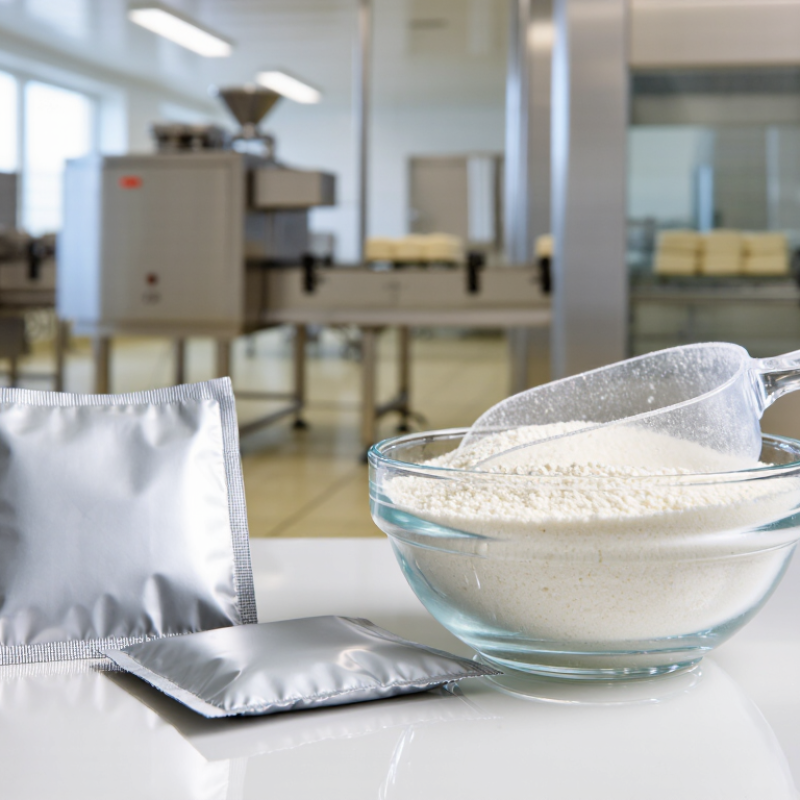
China Top Collagen Powder Manufacturers for Global Buyers

China’s Collagen Powder Sector: Sources, Types, and Global Market Data

China Top Collagen Powder Manufacturers for Global Buyers

China’s collagen powder sector is built on bovine hides, porcine skin, and marine by-products. Fish scales and skins are increasingly visible in coastal processing zones. Type I collagen dominates food and beauty applications, while Types II and III serve more specialized uses. Hydrolyzed collagen peptides dissolve quickly in water. That matters in sachets, tablets, and ready-to-mix drinks.

Grand View Research valued the global collagen market at about USD 9.76 billion in 2022. It projects a 9.6% compound annual growth rate from 2023 to 2030. Other reports use narrower definitions and publish smaller totals. These differences deserve attention. China remains a major manufacturing and exporting base, but customs statistics rarely separate collagen powder from broader protein categories. Exact national output is therefore difficult to verify.

Global buyers should examine more than protein percentage. Supplier audits should review source traceability, hydroxyproline testing, peptide molecular-weight distribution, microbiological results, and heavy-metal limits. Marine material needs species and origin records. Bovine material needs clear documentation for each processing stage. Certificates alone are not enough. Batch samples can expose odor, solubility, or color issues before shipment. Some market claims also sound stronger than the underlying evidence, especially for beauty benefits. A careful buyer should compare independent laboratory reports, technical specifications, and destination-market requirements before approving a factory.

Hydrolyzed Collagen Peptides: Typical Molecular Weights of 2–5 kDa

China Top Collagen Powder Manufacturers for Global Buyers

Hydrolyzed collagen peptides commonly fall within a molecular-weight range of 2–5 kDa. This range supports quick dispersion in water and practical use in beverages, sachets, and nutrition powders. However, “low molecular weight” is not a complete quality claim. Buyers should request the distribution curve, not only one average number. SEC-HPLC or GPC testing can show whether most peptides actually remain within the declared range.

Grand View Research reported that the global collagen market reached approximately USD 10.15 billion in 2023, with continued growth expected through 2030. That expansion increases supplier choices, but it also increases verification work. Experienced buyers should compare hydrolysis methods, protein content, moisture, ash, microbiological limits, and heavy-metal results. A certificate of analysis should identify the test method and production batch. Some specifications look impressive. They still need independent review.

Tips: Ask for a recent third-party report. Check whether “2–5 kDa” describes the main fraction or a testing shortcut. Request solubility data at room temperature, because a powder that clumps in a glass is difficult to use commercially. Confirm marine, bovine, or porcine origin before approval, and match it with destination-market requirements. Do not judge performance from molecular weight alone; taste, odor, peptide profile, and batch consistency matter too.

Top Manufacturer Criteria: GMP, HACCP, ISO 22000, and Traceability

China Top Collagen Powder Manufacturers for Global Buyers

For global buyers, manufacturer selection should begin with documented production controls. GMP shows whether workers, equipment, sanitation, and batch handling follow consistent procedures. HACCP identifies risks before they affect collagen powder. During supplier reviews, request recent audit records, corrective action reports, and hygiene training logs. Certificates alone are not proof of perfect production.

ISO 22000 adds a structured food safety management system. It connects hazard control, management responsibility, communication, and continual improvement. Buyers should check the certificate scope, site address, issuing body, and expiry date. A mismatch can create unnecessary import problems. Ask how the factory manages allergens, moisture, foreign materials, and microbiological testing. Small details matter.

Traceability should work in both directions. A reliable manufacturer can link finished powder to raw material lots, processing dates, operators, and laboratory results. Ask for a sample traceability exercise. Can the team identify affected cartons within hours? Good records should answer that question clearly. Packaging labels, retention samples, and electronic batch records also support verification. Some suppliers may provide excellent documents but weak shop-floor discipline. That gap deserves a physical audit, or at least an independent inspection. Production reality can be imperfect. That is exactly why buyers should test the system, not simply trust the paperwork.

Quality Testing Standards: Protein Content, Heavy Metals, and Microbial Limits

China Top Collagen Powder Manufacturers for Global Buyers

Reliable testing begins with protein content. Buyers often specify at least 90% protein on a dry basis, tested through the Kjeldahl or Dumas method under ISO 20483. However, protein percentage alone can mislead. Moisture, ash, and amino acid profiles should be checked together. The FAO/WHO JECFA framework treats contamination control as a risk-based process, not a single global number. Heavy metals need lead, cadmium, arsenic, and mercury results, preferably from ICP-MS testing. Limits differ between importing markets. A supplier certificate is useful, but it is not proof by itself.

Microbial safety requires defined acceptance criteria. Common purchase specifications may request total aerobic counts below 1,000 CFU/g and yeast and mold below 100 CFU/g. These values are contractual examples, not universal legal limits. USP General Chapters <61> and <62> provide recognized approaches for enumeration and specified microorganisms. Testing should cover Salmonella and Escherichia coli, especially after final packaging. One weakness remains: occasional testing can miss uneven contamination.

Tips: Request batch-specific reports, test dates, laboratory accreditation, and sample photographs. Compare the reported method with ISO, AOAC, or USP procedures. Keep sealed retain samples for independent retesting. Experienced buyers also review water activity, because a dry powder can still fail when storage conditions change.

China Top Collagen Powder Manufacturers for Global Buyers - Quality Testing Standards: Protein Content, Heavy Metals, and Microbial Limits
Quality Dimension Test Item Recommended Acceptance Criterion Typical Test Method Relevant Reference or Buyer Benchmark Why It Matters for Global Buyers
Protein Quality Protein content Not less than 90.0% on a dry basis ISO 1871 or AOAC nitrogen determination, using an appropriate protein conversion factor Common commercial specification for hydrolyzed collagen powders; the buyer should confirm whether the result is reported on an as-is or dry basis Confirms the concentration of collagen-derived protein and prevents moisture or carrier materials from overstating the product’s protein level
Protein Quality Hydroxyproline Declared value supported by batch testing; commonly approximately 8%–14% of the finished powder, depending on collagen source and method Validated HPLC or amino-acid analysis after hydrolysis Hydroxyproline is a characteristic amino acid of collagen; no single global legal limit applies to all collagen ingredients Provides a useful authenticity indicator when interpreted together with total protein and the declared collagen source
Physical and Chemical Moisture or loss on drying Usually not more than 8.0% AOAC moisture method or validated gravimetric loss-on-drying procedure Typical purchasing specification for stable powdered collagen; the final limit should reflect packaging and storage conditions Excess moisture can increase caking, reduce shelf life, and support microbial growth
Heavy Metals Lead (Pb) Target not more than 1.0 mg/kg; the applicable importing-country limit must also be met ICP-MS or ICP-OES after validated sample digestion Maximum levels vary by jurisdiction and product category; EU food-supplement legislation lists 3.0 mg/kg for lead in food supplements Lead may accumulate from animal-derived raw materials, water, processing equipment, or contaminated environments
Heavy Metals Cadmium (Cd) Target not more than 0.5 mg/kg; verify the destination-market requirement ICP-MS or ICP-OES after validated sample digestion Regulatory limits differ according to the food category and market; a stricter internal specification is commonly used for export control Cadmium is a cumulative toxicant and may enter collagen through the original animal material or environmental exposure
Heavy Metals Mercury (Hg) Target not more than 0.1 mg/kg Cold-vapor AAS, ICP-MS, or another validated mercury-specific method Use the importing-country limit where one exists; lower internal limits may be required for sensitive markets Helps control contamination associated with polluted water, marine sources, or contaminated processing inputs
Heavy Metals Arsenic (As) Target not more than 0.5 mg/kg; specify inorganic arsenic where required ICP-MS with an appropriate speciation method when inorganic arsenic is required Total arsenic and inorganic arsenic are not interchangeable reporting categories; the purchase specification should state which is required Inorganic arsenic has greater toxicological significance than many organic arsenic compounds
Microbiology Total aerobic microbial count (TAMC) Not more than 10,000 CFU/g ISO 4833-1 or USP <61>, as applicable to the product category Common quality benchmark for powdered dietary ingredients; the destination market may require a different limit Indicates the overall microbiological hygiene of the raw material and manufacturing process
Microbiology Total yeast and mold count (TYMC) Not more than 100 CFU/g ISO 21527 or USP <61>, using a method suitable for the product matrix Common benchmark used for low-moisture powdered supplements and food ingredients High yeast or mold counts may indicate poor environmental control, moisture exposure, or inadequate packaging
Pathogens Salmonella Absent in 25 g ISO 6579-1, FDA BAM, or an equivalent validated presence/absence method Frequently required for powdered food and supplement ingredients; the specified sample size must be stated on the certificate of analysis Salmonella can survive for extended periods in dry powders and presents a significant public-health risk
Pathogens Escherichia coli Absent in 1 g ISO 16649 or an equivalent validated enumeration or detection method Common supplement-industry benchmark; some markets or product categories may specify a quantitative limit instead Supports verification of sanitary processing and protection against fecal contamination
Microbiology Staphylococcus aureus Absent or below the destination-market limit ISO 6888 or an equivalent validated method Include this test when required by the buyer’s risk assessment, product category, or importing-country rules Useful for products handled after thermal processing or exposed to personnel and processing environments
Allergen and Authenticity Control Species or source identity Matches the declared source, such as bovine, porcine, or marine collagen PCR, peptide mapping by LC-MS, or another validated identity method Identity testing should be selected according to the declared source and applicable religious, dietary, and labeling requirements Helps prevent undeclared species substitution and supports halal, kosher, dietary, and regulatory claims
Documentation Certificate of analysis Required for each production lot and traceable to the batch number Review of laboratory report, sampling plan, test dates, methods, units, and laboratory accreditation Prefer results from an ISO/IEC 17025-accredited laboratory where available Provides verifiable evidence that the supplied lot meets the agreed specification before shipment

Global Buyer Checklist: MOQ, Lead Times, Certifications, and 2024 Trade Data

China’s collagen powder manufacturers serve buyers across food, nutrition, and beauty markets. A practical supplier check begins with MOQ. Many factories quote different minimums for stock formulas, private labels, and customized packaging. Ask for the MOQ per flavor, package size, and production batch.

Lead times need written confirmation. Standard orders may take 20–35 days after artwork approval, while customized formulas can require 45–60 days. Request a production schedule, sample timeline, and shipping window. Delays often begin with packaging changes. Small details matter.

Certification review should go beyond logos. Check current GMP, HACCP, ISO 22000, Halal, or Kosher documents when relevant to your market. Request a batch-specific COA covering collagen content, microbiology, moisture, and heavy metals. Confirm testing through an independent laboratory when the order is large. In 2024, trade data indicated continued international demand for collagen ingredients, but customs figures can vary by HS code and product form. Validate the code with a customs specialist before comparing suppliers. Also examine export records, destination markets, and shipment frequency. One weakness remains: trade data cannot prove product quality. Factory audits and retained samples still matter. Ask difficult questions early.

China Top Collagen Powder Manufacturers for Global Buyers

Global buyer checklist: typical MOQ, lead times, certifications, and 2024 trade-data considerations

The chart presents non-binding procurement planning benchmarks commonly used for collagen powder sourcing: sample approval, laboratory verification, production, export documentation, and shipment preparation. MOQ and certification requirements vary by formula, destination market, packaging format, and private-label specifications. For 2024 trade analysis, collagen powder is commonly reviewed under broader customs categories such as HS 2106.90 or HS 3504.00; these codes are not collagen-specific, so customs data should be validated before comparing suppliers or markets.

Article Source: