Top 10 Activewear Manufacturers for Global Sourcing?
Global activewear sourcing is no longer driven by price alone. Buyers now evaluate fabric performance, production consistency, compliance, and delivery resilience. The right Activewear Manufacturer can influence every stage, from recycled nylon selection to final inspection.
Industry data explains the market’s pressure. Grand View Research estimates that the global sports apparel market reached approximately US$248.7 billion in 2023. Its report projects continued growth through 2030, supported by fitness participation, athleisure demand, and online retail. Definitions differ across reports, however. Some include footwear, accessories, or equipment. That limitation deserves attention.
This guide examines ten activewear manufacturers for global sourcing. It considers technical capabilities, minimum order quantities, sampling speed, quality systems, and export experience. Practical details matter. A factory may produce compression leggings beautifully, yet struggle with color consistency across 10,000 units. Another may offer low prices but lack reliable fabric testing or transparent subcontractor controls.
Sustainability also requires evidence. Textile Exchange’s Materials Market Report highlights the importance of shifting away from virgin fossil-based materials. Claims should be supported by certificates, transaction records, and traceable supply chains. Marketing language alone is not enough.
Our assessment uses publicly available company information, industry reports, and sourcing criteria used by experienced apparel buyers. It is not a guarantee of future performance. Supplier capabilities can change quickly. Production visits, independent audits, lab reports, and approved samples remain essential before signing a purchase order. Even strong rankings need verification.
What Defines a Leading Activewear Manufacturer?
What Defines a Leading Activewear Manufacturer?
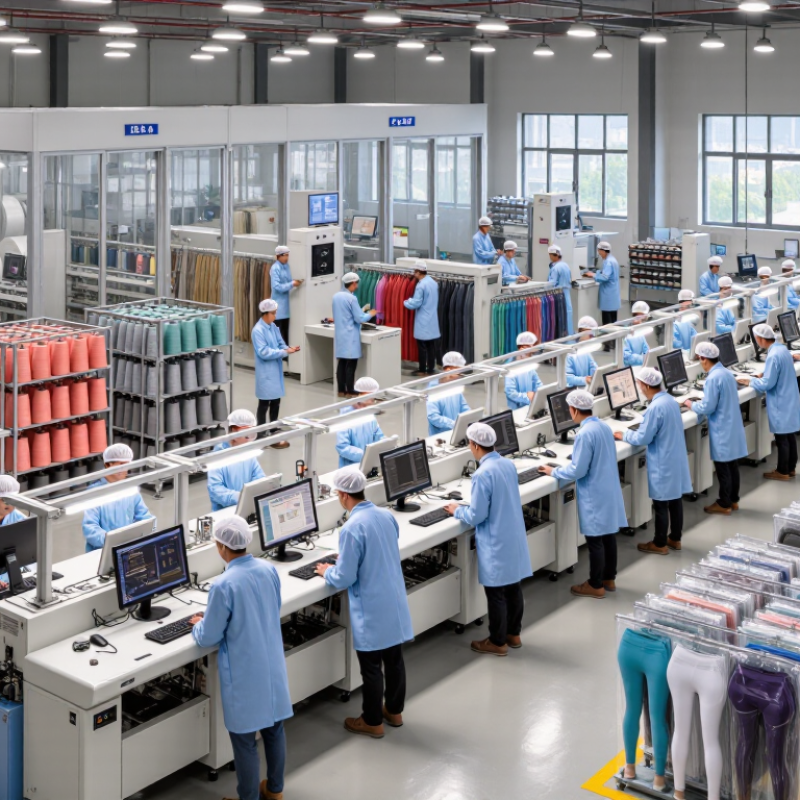
A leading activewear manufacturer does more than cut fabric and attach labels. It understands movement, sweat, recovery, and repeated washing. During factory evaluations, I look for organized sample rooms, clear measurement charts, and staff who can explain fabric behavior. A useful sample should survive stretching, friction, and color testing. It should also fit consistently across several sizes.
Technical knowledge matters. Reliable manufacturers can recommend blends for compression, softness, breathability, or quick drying. They should document fabric composition, test results, and production tolerances. Ask how they control stitching density, waistband recovery, seam strength, and color variation. Small differences become obvious under studio lights. They become worse after ten washes.
Communication is equally important. Strong teams confirm specifications before production and report problems early. They provide realistic lead times instead of attractive promises. Traceable material records and responsible workplace procedures also support dependable sourcing. Yet no manufacturer is perfect. I have seen excellent samples followed by uneven bulk production. That gap deserves careful inspection.
A practical partner welcomes independent quality checks. It accepts corrective action without defensiveness. Pilot orders, inline inspections, and final measurements reduce costly surprises. Minimum order quantities, packaging details, and reorder capacity should be discussed in writing. The best choice is not always the largest factory. It is the manufacturer that proves consistency, admits limitations, and keeps improving.
Key Criteria for Evaluating Global Activewear Suppliers
Top 10 Activewear Manufacturers for Global Sourcing?
Key Criteria for Evaluating Global Activewear Suppliers
Selecting leading activewear manufacturers requires more than a polished showroom. Start with product evidence. Ask for stretch-recovery results, colorfastness reports, pilling grades, and wash-test samples. A running legging should return to shape after repeated wear. Request production records for comparable orders. Supplier claims are not proof.
Capacity must match your launch plan. Verify monthly output, minimum order quantities, sampling speed, and peak-season lead times. Textile Exchange’s 2024 Materials Market Report recorded 124 million tonnes of global fiber production in 2023. It projects 160 million tonnes by 2030. This growth increases material risk. Evaluate recycled-content certificates, fiber traceability, and wastewater controls. Check whether documents cover the actual factory, not only a trading office. Fashion Revolution’s 2023 Fashion Transparency Index reported an average transparency score of just 26% across 250 companies.
Reliable sourcing also depends on people and process. Review social audits, worker grievance channels, corrective-action history, and subcontractor disclosure. Request test reports from accredited laboratories. Compare prices with fabric weight, trims, packaging, inspection, and freight assumptions. A low quote can hide weak quality control. It happens.
Do not rank suppliers by scale alone. A smaller facility may offer better technical communication, while a larger plant may provide stronger continuity. This is not guaranteed. Visit the site when possible, interview production and quality teams, and place a controlled pilot order. Track defects, delivery variance, and response time before approving volume. Practical judgment still matters.
Top 10 Activewear Manufacturers for International Sourcing
Top 10 Activewear Manufacturers for International Sourcing
Choosing among the top ten activewear manufacturers requires more than comparing unit prices. International buyers should examine export experience, production capacity, fabric testing, and communication speed. A reliable factory can provide clear tech-pack reviews, size samples, and documented quality checks. It should also explain minimum order quantities, lead times, payment terms, and packaging details without vague promises. Certifications, social compliance records, and chemical safety reports deserve careful review. These documents support responsible sourcing and reduce avoidable border delays.
Tips: Request a pre-production sample. Test stretch, recovery, colorfastness, and stitching after washing. Ask for recent audit evidence, not only a certification logo. Confirm whether production is handled in-house or through undisclosed subcontractors. Small details matter.
From practical sourcing work, sample approval often reveals more than a polished factory presentation. Check waistband pressure, pocket depth, seam comfort, and label placement. A sample may look excellent but fail after repeated movement. I once underestimated freight timing, and the delay affected a seasonal launch. That mistake still influences how I compare suppliers. Build a realistic timeline with inspection days, customs clearance, and possible revisions. Price remains important, but the lowest quote can hide weaker fabric consistency or limited production control. A thoughtful shortlist balances technical ability, transparent documentation, ethical operations, and dependable international delivery. No supplier is perfect. That deserves honest discussion.
Manufacturing Capabilities, Certifications, and Product Specialties
Global activewear sourcing depends on more than attractive samples. Experienced manufacturers should explain fabric development, pattern grading, sampling, and production capacity clearly. Look for facilities that handle moisture-wicking knits, compression fabrics, seamless construction, bonded seams, and recycled materials. Their equipment should support consistent stitching, accurate heat transfer, and stable color matching.
Certifications require careful checking. ISO 9001 can indicate a documented quality system, while OEKO-TEX Standard 100 focuses on tested textile safety. Recycled-content claims may require GRS certification, depending on the material and supply chain. Always verify the certificate number, validity date, issuing body, and covered factory location. A certificate alone does not guarantee perfect workmanship. I have seen excellent paperwork paired with weak seam control.
Tips: Request a detailed capability sheet and recent test reports. Ask for inspection records, not only promises. Check shrinkage after washing, colorfastness, pilling, stretch recovery, and print durability. Confirm minimum order quantities, sample fees, lead times, and defect-handling procedures in writing. Visit the factory when possible. A video tour helps, but it can hide production gaps. Start with a small trial order, then compare measurements, packaging, and final inspection results against the approved sample.
Top 10 Activewear Manufacturers for Global Sourcing
Manufacturing capabilities, certifications, and product specialties
This 100-point sourcing benchmark prioritizes the factors commonly used to evaluate activewear suppliers: technical product development, fabric performance, production flexibility, quality systems, social responsibility, environmental management, and certification readiness. Scores are benchmark weights for supplier comparison, not rankings of individual companies. Buyers should verify current certificates, audit reports, testing records, minimum order quantities, lead times, and production capacity directly with each manufacturer.
How to Select the Right Activewear Partner for Your Brand
Choosing the right activewear partner requires more than comparing factory prices. Review fabric knowledge, stitching quality, production controls, and communication habits. A strong manufacturer should understand stretch recovery, moisture management, colorfastness, and flatlock seams. Ask for recent samples, not only polished catalog pieces. Small details matter.
Request a factory profile, production capacity, minimum order quantity, and realistic lead times. Confirm whether cutting, sewing, printing, and packaging happen in-house. Independent testing can verify fabric composition, shrinkage, and performance claims. Check traceability for recycled materials and request documentation for destination-market requirements. A quick video call is useful, but an on-site audit reveals more. Look closely at storage areas, inspection stations, and unfinished garments.
Build a scorecard with quality, pricing, responsiveness, flexibility, and delivery history. Then place a small trial order before committing to seasonal volumes. Measure size consistency, seam strength, packaging accuracy, and the factory’s response to defects. Ask how the team handles missed deadlines. Their answer may be more valuable than a sales presentation. No scorecard is perfect. I would leave room for judgment, because a reliable partner can still make occasional mistakes. The important question is whether problems are reported early, documented clearly, and corrected with evidence. A factory that welcomes difficult questions is often safer than one promising flawless production.

