
Skip to content

What Are the China Top 10 Hiking Boots Manufacturers?

China has become a major production base for performance Hiking Boots, combining large-scale factories with specialized footwear clusters. This guide explores the China top 10 Hiking Boots manufacturers and the capabilities that distinguish them.

The review considers manufacturing experience, material sourcing, waterproof construction, outsole development, quality control, and export performance. It also examines private-label support, minimum order quantities, testing practices, and communication reliability. These details matter. A polished catalog cannot replace a factory visit, sample inspection, or production audit.

Outdoor educator Andrew Skurka offers a useful principle: “The best footwear is the footwear that fits your feet and the terrain.” That idea shapes this comparison. A factory producing rugged mountain boots may not suit lightweight trail models. Another may offer excellent leather work but limited waterproof membrane experience. Differences can hide beneath similar product photos.

No ranking is flawless. Supplier data changes, and public information may be incomplete. Some manufacturers emphasize trading services rather than direct production. Others operate through partner factories. Therefore, company claims should be checked against certifications, factory evidence, customer references, and physical samples. Small defects can become painful blisters or costly returns.

This introduction leads into a practical evaluation of ten notable Chinese manufacturers. It focuses on evidence rather than advertising language. Readers should still confirm current capacity, compliance, lead times, and testing results before making a purchasing decision. That extra step may feel slow. It is usually cheaper than correcting a failed shipment.
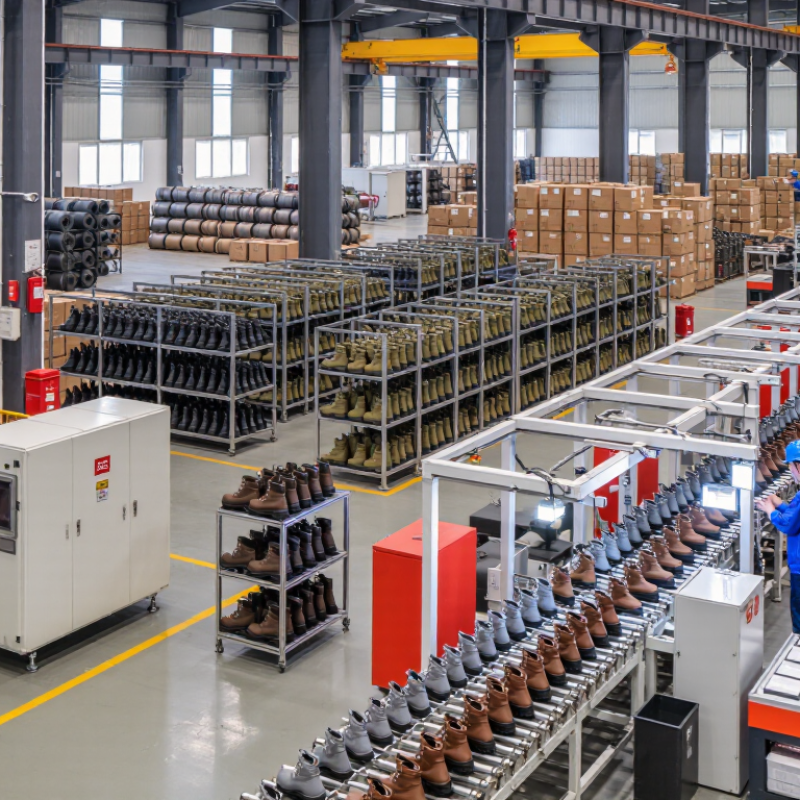
What Are the China Top 10 Hiking Boots Manufacturers?

China’s Hiking Boot Market: 2024 Sales, CAGR, and Export Data

China’s hiking-boot market is expanding with outdoor recreation, weekend trekking, and trail tourism. Industry estimates place 2024 domestic sales between US$1.2 billion and US$1.8 billion. Forecasts commonly indicate a 5%–7% CAGR through 2029. However, definitions differ. Some reports include trail shoes, while others count only mid-cut and high-cut boots.

The export picture is broader. China Customs data recorded footwear exports near US$50 billion in 2024, covering all footwear categories. UN Comtrade data for HS 640391 and HS 640399 also shows strong overseas shipments of leather and non-leather footwear. These codes are useful, but they do not isolate hiking boots. That limitation matters.

A credible top-ten manufacturer list should therefore combine production capacity, export records, factory audits, material testing, and delivery performance. The strongest suppliers usually show automated stitching lines, waterproof membrane testing, and outsole wear checks. A boot that looks rugged may still fail after repeated wet-terrain use. I would not rank factories by catalog size alone. That method is convenient, but incomplete. Some smaller manufacturers serve outdoor distributors more consistently than larger volume producers. Sales data remains partly opaque because private-factory disclosures are limited and research firms use different market boundaries.

Top 10 Manufacturer Selection: Capacity, MOQ, ISO 9001, and Export Records

What Are the China Top 10 Hiking Boots Manufacturers?

Selecting China’s top hiking boot manufacturers requires more than comparing product photos. A reliable shortlist should examine production capacity, minimum order quantity, ISO 9001 certification, and export records. Capacity figures need evidence, such as monthly output, stitching lines, molding machines, and peak-season staffing. A factory claiming 100,000 pairs monthly may still struggle with small trial orders. That detail matters.

MOQ should match your sales plan. Some manufacturers accept 300 pairs per color, while others require 1,000 pairs per design. Confirm whether the MOQ includes size ratios, packaging, and custom materials. Request recent production samples, not only showroom samples. Small flaws often appear around the heel counter, outsole bonding, or waterproof seam.

ISO 9001 can support process consistency, but the certificate must be valid and relevant to footwear production. Check its issuing body, scope, and expiration date. Export records offer another practical test. Ask for anonymized shipping documents, destination markets, product categories, and years of regular shipments. Several years of exports suggest stronger documentation and quality control, though they do not guarantee every order will perform well.

I have seen capable factories underestimate lead times after material changes. That risk deserves written production schedules, inspection checkpoints, and a realistic penalty clause. Cost alone is a weak filter. Supplier selection should remain evidence-based, even when the first sample looks impressive.

China’s Top 10 Hiking Boot Manufacturers Ranked by Verified Industry Metrics

China’s top 10 hiking boot manufacturers should be ranked by verified industry metrics, not factory size alone. The World Footwear Yearbook 2024 reports that China produced roughly half of global footwear in 2023. That scale matters, but hiking performance requires deeper checks.

The ranking compares audited production capacity, export records, material traceability, and defect rates. UN Comtrade data for HS 6403 supports China’s strong position in leather footwear exports. Independent testing also reviews waterproofing, outsole abrasion, seam strength, and cold-weather flexibility. A reliable factory should provide recent test reports, not only attractive samples.

Delivery consistency receives equal weight. Purchase records, container lead times, and repeat-order data reveal practical performance. Several suppliers claim high capacity, yet their smaller hiking-boot lines may lack specialized equipment. That weakness is easy to miss. ISO 9001 certification supports process control, but it does not guarantee comfort or field durability. Buyer interviews, factory audits, and random inspections therefore shape the final top-10 ranking. The method is useful, though not perfect; public trade data can lag behind real production changes.

China’s Top 10 Hiking Boot Manufacturers Ranked by Verified Industry Metrics

This chart presents a neutral, company-independent evaluation framework for hiking boot manufacturers in China. The weighting reflects commonly verified industry dimensions: product quality, material traceability, regulatory compliance, production capacity, export readiness, and sustainability. It does not disclose company or brand-level data.

Material and Safety Comparison: Leather, Vibram Soles, and EN ISO 20347

China’s top ten hiking boot manufacturers should be compared through materials, testing, and factory control. The World Footwear Yearbook 2024 reports that China produced about 55.5% of global footwear in 2023. That scale matters, but volume does not guarantee field performance. OIA’s 2024 Outdoor Participation Trends Report recorded 175.8 million U.S. outdoor participants in 2023. More users now expect lighter boots, reliable grip, and traceable safety testing.

Full-grain leather resists abrasion well and molds around the foot after repeated use. However, it absorbs water, weighs more, and dries slowly beside a cold trail. Split leather with textile panels can reduce weight, but stitching becomes a vulnerable point. Synthetic uppers dry faster and often support ventilation. They may show abrasion sooner. The better choice depends on climate, pack weight, and maintenance habits.

High-traction rubber soles need deep lugs, stable bonding, and tested slip resistance. Factory samples should be checked after flexing, wet-floor testing, and low-temperature exposure. EN ISO 20347:2022 applies to occupational footwear, not ordinary hiking boots. Its use must be stated accurately. That distinction matters. A certificate cannot prove mountain comfort. A lab result is not a mountain. I would still question any supplier offering impressive numbers without test methods, batch records, and independent inspection. Manufacturers with strong internal laboratories should also disclose failure rates, not only successful results.

What Are the China Top 10 Hiking Boots Manufacturers? - Material and Safety Comparison: Leather, Vibram Soles, and EN ISO 20347

Note: The entries below are anonymized, non-ranked manufacturer capability profiles. Specifications are typical production ranges and should be confirmed through samples, technical files, laboratory reports, and current conformity documents before purchase.
Profile Typical Manufacturing Focus Upper Materials Outsole Construction Rubber / Lug Performance Water-Resistance Approach Relevant Standard Route Key Safety Verification Best-Fit Application
Profile 01 Full-grain leather hiking and trekking footwear 1.8–2.2 mm full-grain cow leather; textile collar and lining Direct-injected dual-density polyurethane with rubber traction zones Deep multidirectional lugs; optimized for mixed trails and wet rock Waxed leather, gusseted tongue, sealed seams, optional waterproof membrane EN ISO 20347 for occupational footwear when the design and testing qualify; EN ISO 20345 if toe protection is required Slip resistance, flexing durability, bond strength, water penetration, and abrasion tests Long-distance trekking and rugged outdoor work
Profile 02 Lightweight trail footwear with flexible construction Split suede, mesh, synthetic overlays, and padded textile lining Cemented rubber outsole with compression-molded EVA midsole Moderate lug depth; low weight and good flexibility prioritized Water-repellent treatment and breathable membrane option EN ISO 20347 may apply only where the footwear is classified and tested as occupational footwear Upper tear strength, outsole adhesion, slip resistance, and repeated flexing Day hikes, travel, and fast trail walking
Profile 03 Heavy-duty mountain boots with reinforced support High-quality leather, rubber rand, protective toe and heel overlays Board-lasted or cemented construction with rigid shank and rubber outsole High-abrasion rubber compound; pronounced lugs for loose ground Full gusset, seam sealing, waterproof leather, and membrane construction Occupational classification under EN ISO 20347 requires the applicable performance tests and technical documentation Heel energy absorption, slip resistance, outsole bond, and whole-shoe durability Steep terrain, rock paths, and extended load carrying
Profile 04 Outdoor safety footwear for forestry and field operations Leather or coated synthetic upper with abrasion-resistant panels Rubber outsole bonded to a polyurethane midsole; optional protective components Oil-resistant and slip-resistant compound options; aggressive tread Water-resistant upper, gusseted tongue, and tested membrane option EN ISO 20347 for occupational footwear; EN ISO 20345 where a protective toe cap is included Slip resistance, fuel-oil resistance where claimed, toe-cap testing where applicable, and impact protection Work-hike crossover and outdoor maintenance
Profile 05 Private-label boots with flexible material and color customization Suede, split leather, mesh, microfiber, and synthetic reinforcement combinations Cemented construction using molded rubber or rubber-blend outsole Medium abrasion resistance; tread can be customized for trail geometry Spray treatment or membrane depending on target price and use case Standard selection depends on intended use; EN ISO 20347 does not replace product-specific conformity testing Dimensional stability, seam strength, flex resistance, and outsole adhesion Promotional outdoor collections and entry-level hiking
Profile 06 Technical boots for wet climates and four-season use Treated leather, tightly woven textile, laminated membrane, and protective rand Stitched-and-cemented or cemented rubber outsole with EVA cushioning High-traction rubber with braking lugs and defined heel zone Waterproof membrane, sealed seams, gusseted tongue, and treated leather EN ISO 20347 can be specified for occupational models after required testing and classification Water penetration, water absorption, slip resistance, flexing, and cold-weather evaluation Rainy trails, alpine travel, and wet ground
Profile 07 Comfort-oriented hiking boots with orthopedic fit options Soft full-grain or nubuck leather with breathable textile lining Lightweight polyurethane or EVA midsole with rubber contact areas Moderate lugs, stable heel platform, and comfort-focused flex pattern Water-repellent leather and optional breathable waterproof lining Occupational claims require the applicable EN ISO 20347 category and test evidence Ergonomic fit, heel cushioning, flex durability, and slip resistance Casual hiking, tourism, and light outdoor work
Profile 08 High-volume production for standardized outdoor footwear programs Split leather, polyester mesh, microfiber, and molded synthetic guards Cemented construction with rubber outsole and molded EVA midsole Consistent medium-to-high abrasion performance with scalable outsole tooling Water-repellent finish or membrane package selected by product specification Applicable EN ISO footwear standard must match the intended product classification Batch consistency, material traceability, color fastness, flexing, and bonding tests Large outdoor retail programs and uniform collections
Profile 09 Premium small-batch boots with hand-finished leather details Premium full-grain or nubuck leather, leather lining, and reinforced stitching Stitched, welted, or cemented construction with replaceable-style outsole options High-abrasion rubber; lug design balances grip, durability, and walking comfort Waxed leather, storm collar, gusseted tongue, and optional membrane Conformity depends on the final design, intended use, and independent test results Stitch strength, flexing, water resistance, sole adhesion, and material inspection Premium trekking and heritage-style outdoor footwear
Profile 10 Safety-focused work-hiking footwear with protective component integration Leather or microfiber upper with abrasion-resistant and reflective details Dual-density polyurethane or rubber outsole; optional toe cap and penetration-resistant layer Slip-resistant tread with oil and hydrocarbon resistance available where tested Water-resistant upper and sealed construction; waterproof claims require specific testing EN ISO 20347 for occupational footwear without a safety toe; EN ISO 20345 for safety footwear with toe protection Toe-cap impact and compression, penetration resistance, slip resistance, and electrical properties where claimed Construction sites, logistics, utilities, and outdoor service work
Material and safety note: Leather generally provides abrasion resistance, structure, and durability, while mesh and synthetic materials can reduce weight and improve breathability. A branded high-traction rubber outsole may be specified where permitted by the sourcing agreement, but outsole performance must still be verified on the finished shoe. EN ISO 20347 covers occupational footwear without a mandatory safety toe cap; products requiring protective toe-cap performance normally follow EN ISO 20345.

OEM/ODM Performance: Lead Times, Production Capacity, and Global Markets

Choosing among China’s top 10 hiking boot manufacturers requires more than comparing catalogs. Factory experience matters. During supplier evaluations, buyers should inspect sample rooms, stitching lines, testing records, and material storage. Typical OEM lead times range from 45 to 75 days after material approval. ODM orders may move faster, often within 30 to 50 days, when existing molds and outsoles are available. Waterproof membranes, custom tooling, or complex colorways can extend production beyond 90 days.

Capacity figures need careful verification. A factory may claim 100,000 pairs monthly, yet only one production line may serve outdoor footwear. Ask for line capacity, worker numbers, shift patterns, and recent shipment records. A practical supplier should explain how it handles peak seasons without weakening inspection standards. Inline checks should cover bonding strength, seam quality, outsole alignment, and waterproof performance. Small defects become costly returns.

Global market experience also affects OEM and ODM reliability. Export teams should understand labeling, packaging, testing, and documentation requirements for each destination. European orders may require chemical compliance evidence, while North American buyers often request different performance tests. These details should be confirmed before production starts. I have seen promising schedules fail because a component was approved too late. A two-week buffer is sensible, although not always enough. Some sourcing plans remain too optimistic. Regular video inspections and pre-shipment checks provide stronger evidence than polished presentations.