China Best Syrup Clarification Equipment for Global Buyers?
China’s best syrup clarification equipment must be judged beyond price, output, or polished stainless steel. Global buyers need cleaner syrup, stable color, controlled losses, and reliable service after installation. The equipment should perform under real factory conditions, including variable raw-material quality, high viscosity, foam, temperature shifts, and continuous production.
The FAO and OECD Agricultural Outlook 2024–2033 expects global sugar production and consumption to remain above 180 million tonnes annually. That scale increases pressure on processors to protect sucrose yield while meeting stricter food-quality expectations. Reports from Grand View Research also identify automation, filtration, and process-efficiency upgrades as important trends across food-processing equipment. These figures matter. A clarification system is not an isolated tank. It affects filtration speed, evaporation load, cleaning frequency, labor, and final syrup appearance.
Sugar-engineering authority Peter Rein has emphasized the central principle: “The objective of clarification is to remove impurities without losing sucrose.” That sentence deserves attention. A brighter syrup is not automatically a better syrup if excessive heating damages quality or filtration removes valuable solids. Buyers should compare retention time, clarifier design, filter area, CIP access, instrumentation, and documented performance data. Ask for trial results.
Do not trust brochures alone.
China offers strong manufacturing capacity, competitive customization, and mature stainless-steel fabrication. Yet supplier quality can vary. Some specifications look impressive but remain difficult to verify. This guide examines how global buyers can assess syrup clarification equipment through process evidence, hygienic design, energy use, after-sales support, and total ownership cost. The answer may not be one universal machine. It depends on the syrup.
What Is Syrup Clarification Equipment?
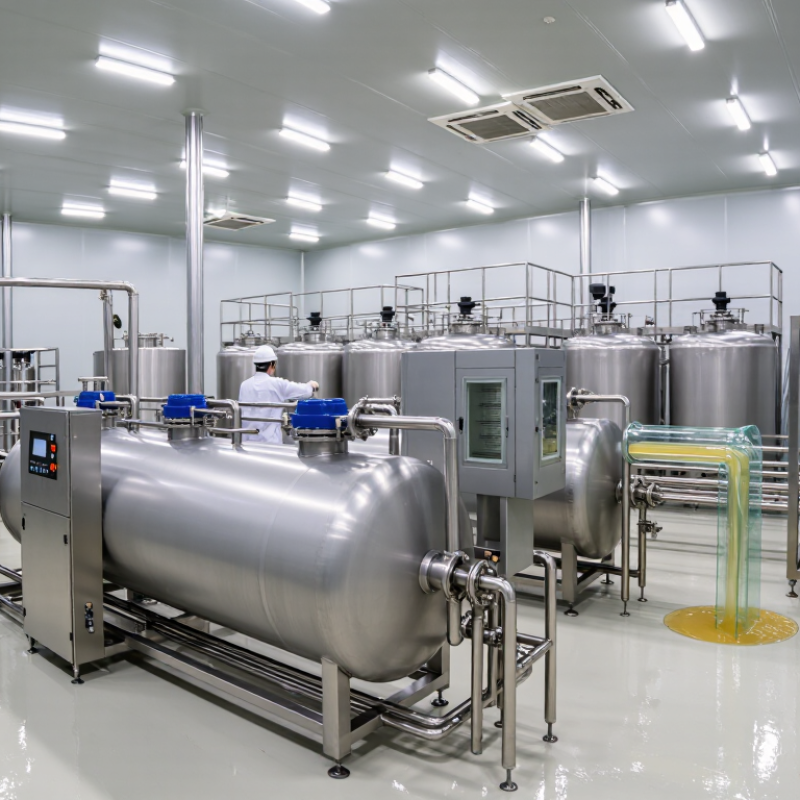
Syrup clarification equipment removes suspended solids, waxes, fibers, and color-forming particles from sugar syrup. It normally combines heating, chemical conditioning, settling, and filtration. A clarifier may include a reaction tank, flocculation chamber, sedimentation vessel, and polishing filter. The target is a brighter syrup with lower turbidity before evaporation or crystallization.
This equipment matters because global sugar processing operates at enormous scale. The USDA Foreign Agricultural Service, in Sugar: World Markets and Trade, November 2024, estimated 2024/25 global centrifugal sugar production at about 186 million metric tons. Even small filtration losses can become expensive at this volume. In plant evaluations, operators usually watch temperature, Brix, pH, turbidity, pressure drop, and syrup residence time. Codex Standard for Sugars, CXS 212-1999, also provides internationally recognized quality requirements for several sugar products. Clear syrup does not always mean superior syrup. Excessive treatment can reduce yield or alter color.
Tips: Match clarification capacity with peak flow, not average flow. Keep sampling points before and after each treatment stage. Test filter performance with real syrup, because laboratory water results can mislead. Sediment volume is useful, but turbidity trends often reveal problems earlier. A practical weakness remains: many specifications focus on equipment size, while cleaning access receives less attention. That oversight can increase downtime and maintenance risk.
How Syrup Clarification Systems Work
Syrup clarification systems work by removing suspended particles without damaging the syrup’s color, flavor, or concentration. In a typical setup, raw syrup enters a holding tank with gentle agitation. A controlled heating stage lowers viscosity, allowing particles to move more easily. Temperature matters. Excessive heat can darken sensitive syrups.
The liquid then passes through a coarse screen, followed by finer filtration. Some systems use filter aids to capture tiny particles, while others rely on cartridge or membrane filters. A pressure gauge helps operators detect clogging before flow becomes unstable. Clear sight glasses also reveal foam, sediment, or uneven color during production.
Practical control is essential. Operators should check turbidity, temperature, pressure, and flow at regular intervals. Cleaning cycles remove sticky sugar deposits from tanks, pipes, and filter housings. Poor cleaning can create contamination risks and shorten equipment life.
Not every syrup needs the same treatment. Thick fruit syrup may require slower flow and stronger prefiltration. A thin sugar solution may pass too quickly through an unsuitable filter. That mistake is common. Equipment selection should follow laboratory trials, daily capacity, cleaning requirements, and local power conditions. Reliable suppliers should provide material certificates, operating data, maintenance guidance, and realistic performance limits. Test the process first. It prevents expensive assumptions later.
Key Equipment Types and Their Applications
China Best Syrup Clarification Equipment for Global Buyers?
Key Equipment Types and Their Applications
Syrup clarification starts with removing suspended solids, color bodies, and fine particles. Filter presses suit batch production and viscous syrups. Their cloth chambers capture cake for easier disposal. Candle filters provide enclosed, continuous operation for cleaner processing areas. Centrifuges work well when crystals or dense impurities require rapid separation.
Membrane systems can polish syrup after primary clarification. Microfiltration often targets particles between 0.1 and 1 micrometer. Activated carbon vessels help reduce color, but they require careful contact-time control. The USDA Foreign Agricultural Service reported global sugar production above 180 million metric tons in recent forecasts. That scale increases demand for stable, energy-aware clarification lines. Yet larger capacity does not always mean better performance. A poorly sized pump can create pressure spikes and shorten filter life.
Tips: Ask for pilot-test records, not only brochures. Check food-contact materials, gasket certificates, cleaning temperature, and pressure alarms. Request turbidity data before and after filtration. A useful target may be below 5 NTU, but the process decides the true limit. Confirm local electrical standards and spare-part availability. Do not ignore wastewater volume. It can become the hidden operating cost. Some specifications look impressive. Real syrup testing matters more.
China Best Syrup Clarification Equipment for Global Buyers
The chart compares representative nominal particle-separation scales used in syrup clarification. Lower values indicate finer clarification. Screens and bag filters are commonly used for coarse solids removal, while filter presses, candle filters, and membrane systems support progressively finer clarification. Actual performance depends on syrup viscosity, suspended-solids loading, temperature, and process conditions.
How to Evaluate Chinese Syrup Equipment Suppliers
China Best Syrup Clarification Equipment for Global Buyers?
How to Evaluate Chinese Syrup Equipment Suppliers
Choosing syrup clarification equipment requires more than comparing online prices. Start with process compatibility. Check syrup viscosity, hourly capacity, filtration accuracy, heating needs, and product contact materials. Stainless steel 316L is often suitable for hygienic applications. Ask for flow diagrams, dimensional drawings, and cleaning procedures. A reliable supplier should explain how the clarifier performs under your actual syrup conditions, not only under laboratory tests.
Tips: Request a sample trial before signing a large order. Send a measured syrup sample when possible. Review turbidity results, filtration speed, temperature control, and cleaning time. Visit the workshop or arrange a live video inspection. Examine weld quality, polishing, control cabinets, spare parts, and pressure testing records. Independent inspection can reveal details that photographs hide. It costs more, but mistakes cost more.
Evaluate technical support as carefully as the machine. Confirm installation guidance, operator training, response times, warranty terms, and documentation language. Request references from comparable food-processing projects, while checking whether the examples are recent. Certifications matter, but certificates alone do not prove stable performance. Ask who issued them and whether they match the delivered equipment. Some suppliers communicate confidently yet provide vague data. That is a warning sign. A practical evaluation may still miss hidden weaknesses, so leave room for testing, correction, and honest review before final acceptance.
Installation, Operation, and Maintenance Considerations
For global buyers, syrup clarification equipment should be judged by installation discipline, not brochure capacity. A level floor, safe drainage, and enough clearance around the filter housing prevent later access problems. Confirm pipe diameter, inlet pressure, heating load, and electrical standards before shipment. A factory acceptance test should record flow rate, turbidity reduction, temperature stability, and pressure loss. Small omissions become expensive on site.
During operation, keep syrup temperature within the validated process range. Excessive heat can darken syrup, while low heat may increase viscosity and overload the pump. Operators should record pressure before and after clarification. A rising differential pressure signals filter loading. Keep it visible.
FAO ’s State of Food and Agriculture 2019 estimated that 14% of food is lost between harvest and retail, making stable processing and reduced rework commercially important. The U.S. FDA Food Code 2022 also emphasizes hygienic equipment design, cleanable surfaces, and contamination control.
Maintenance needs a written schedule, even for simple systems.
Inspect seals, gaskets, valves, sight glasses, and pressure gauges weekly. Clean immediately after production rather than allowing syrup residue to harden. Use documented cleaning concentrations and contact times. Keep it dry.
The U.S. Department of Energy notes that optimized pumping systems can reduce energy use through proper sizing, control, and maintenance. In practice, however, operators sometimes trust a fixed cleaning routine too much. Actual syrup composition changes, so cleaning frequency should be adjusted using pressure trends, inspection records, and verified product quality.

