
Ceramic Cooking Ware is moving from a niche kitchen choice toward a mainstream cookware category. Grand View Research reports continued growth in the global ceramic cookware market, supported by demand for convenient, attractive, and lower-oil cooking surfaces. Fortune Business Insights also identifies health awareness, household upgrades, and expanding online retail as important market drivers. The reports show momentum. They do not prove every product is excellent.
“Ceramic cookware is typically metal cookware with a ceramic coating,” explains Nicole Papantoniou, director of the Good Housekeeping Institute’s Kitchen Appliances and Innovation Lab. Her point matters. Many buyers imagine a solid ceramic pot, while most modern sets use an aluminum body with a ceramic-based nonstick surface. Construction changes cooking speed, weight, durability, and cleaning requirements.
This guide examines seven Ceramic Cooking Ware sets for global buyers. It compares coating quality, heat distribution, oven compatibility, handle design, included pieces, and warranty support. A bright white skillet may look beautiful on a showroom shelf. It may also stain after repeated tomato-based cooking. Small details matter.
No set is perfect.
Usage habits influence performance. High heat, metal utensils, dishwasher cycles, and sudden temperature changes can shorten a coating’s useful life. Our selection therefore considers practical kitchen experience, not advertising language alone. Prices and certifications can vary by country, so buyers should verify local safety documentation and manufacturer instructions. Some conclusions remain subjective. That is worth admitting. A lightweight set may suit a student apartment, while a heavier collection may better serve frequent family cooking.
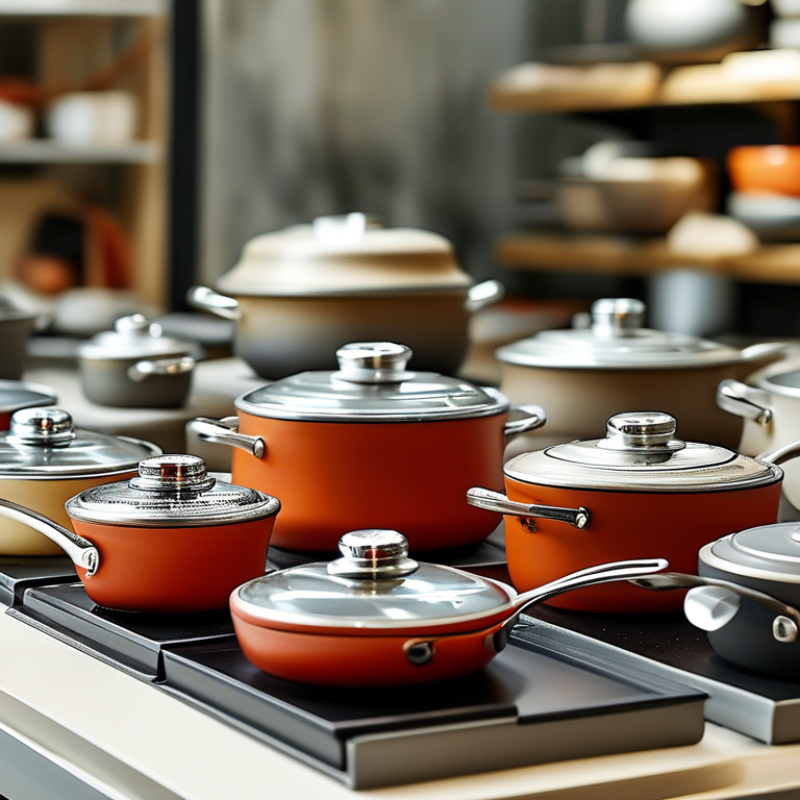
Ceramic cookware sets usually fall into two categories: solid ceramic vessels and metal pans with a ceramic-based nonstick coating. Solid ceramic pieces hold heat steadily and suit slow braising, baking, and serving. Coated pans are lighter and respond faster on the stove. The difference matters because their care routines are not identical. A solid ceramic pot may tolerate the oven well, while a coated pan can lose performance under excessive heat.
When comparing a set, inspect the cooking surface, base material, and heat rating. A thick aluminum core warms quickly, while stainless steel adds strength and stability. Check whether the base works with induction, gas, or electric burners. Lids should sit firmly and include heat-resistant handles. Useful sets often contain a skillet, saucepan, sauté pan, and stockpot, rather than many rarely used pieces. Keep it practical.
I test handle balance with a full pan, not an empty one. That small detail changes daily comfort. I also look for smooth rims, even coating, and clear care instructions. “Dishwasher safe” sounds convenient, but repeated washing may shorten coating life. My own mistake was using high heat to speed up boiling; the surface showed discoloration afterward. Ceramic cookware is not indestructible. Avoid metal tools when the manufacturer advises against them, and let hot cookware cool before washing. No set fits every kitchen. Space, stove type, cooking habits, and replacement-part availability deserve equal attention.
| Set Type | Typical Pieces | Main Material | Best Cooking Uses | Heat Compatibility | Essential Features | Global Buyer Considerations |
|---|---|---|---|---|---|---|
| Ceramic-Coated Fry Pan Set | 2–3 frying pans, usually 20 cm, 24 cm, and 28 cm | Aluminum or stainless-steel body with a ceramic-based non-stick coating | Eggs, pancakes, sautéed vegetables, fish, and quick meals | Usually gas, electric, and ceramic-glass; induction compatibility requires a magnetic base | Even heat distribution, low-oil cooking, comfortable handles, and a smooth release surface | Check the coating-care instructions, induction symbol, handle construction, and maximum oven temperature |
| Ceramic Saucepan and Sauté Pan Set | 2–4 pieces, commonly 1.5–2.5 L saucepans and a 24–28 cm sauté pan | Ceramic-coated metal or vitrified ceramic cooking surfaces | Sauces, grains, soups, braised vegetables, and one-pan dishes | Stovetop use; oven suitability varies by lid, handle, and construction | Tight-fitting lids, stable bases, pour-friendly rims, and useful volume markings | Compare usable capacity in liters, lid materials, local stovetop standards, and replacement-part availability |
| Ceramic Dutch Oven Set | 1 large covered pot, typically 4–6 L, sometimes with a smaller pot | Glazed stoneware or ceramic-coated cast iron | Slow cooking, stews, casseroles, bread baking, and family-size meals | Oven and stovetop use depend on the specific material; direct thermal shock should be avoided | Heat retention, durable lid, wide handles, smooth interior, and condensation control | Check empty weight, oven rating, cooking-surface compatibility, and safe temperature-change guidance |
| Ceramic Casserole and Baking Set | 2–4 baking dishes, commonly 1.5–3.5 L, with shallow and deep formats | Oven-fired ceramic or glazed stoneware | Lasagna, gratins, roasted vegetables, pies, and baked desserts | Generally oven, microwave, and dishwasher compatible when specified by the manufacturer | Non-porous glaze, even walls, integrated handles, stackable shapes, and easy cleaning | Verify microwave and dishwasher approval, metric dimensions, thermal-shock limits, and packed weight |
| Ceramic Roasting and Grilling Set | 2–3 pieces, usually a roasting dish, rack, or grill pan | High-fired ceramic, stoneware, or ceramic-coated metal | Roasted meat, poultry, vegetables, baked fish, and grilled-style dishes | Oven use is common; direct flame, induction, and broiler use must be confirmed separately | Deep walls, raised-rack design, grease drainage, heat-resistant handles, and stain-resistant glaze | Review internal dimensions for local oven sizes and confirm whether accessories are food-contact safe |
| Ceramic Wok and Stir-Fry Set | 1 wok, commonly 28–32 cm, with a lid or turner | Ceramic-coated aluminum or ceramic-coated carbon-steel-style body | Stir-frying, steaming with a rack, sautéing, and shallow braising | Gas and electric use are common; induction requires a compatible magnetic base | Broad cooking area, secure lid, balanced weight, heat-resistant handle, and easy-clean surface | Check base diameter, induction performance, utensil recommendations, and whether the shape fits the cooktop |
| Ceramic Table-to-Oven Serving Set | 4–8 pieces, often individual ramekins, serving bowls, and one larger dish | Glazed porcelain, stoneware, or oven-safe ceramic | Individual portions, baked pasta, desserts, soups, and tabletop serving | Oven and microwave use are typical when clearly labeled; not intended for direct stovetop heat | Food-safe glaze, thermal resistance, stackability, ergonomic rims, and coordinated capacities | Confirm food-contact compliance, capacity in milliliters, dishwasher suitability, and protective export packaging |
Note: Compatibility, maximum temperature, dishwasher safety, and thermal-shock resistance vary by construction and should be confirmed in the product specifications.
