10 Best 3 1 8 Inch Thermal Paper Rolls for Global Buyers
Choosing the right 3 1 8 Inch Thermal Paper roll involves more than comparing prices. Global buyers must examine print clarity, coating stability, roll length, core size, and packaging quality. These details affect checkout speed, customer receipts, shipping labels, and daily equipment maintenance. A roll that looks economical may create jams, faded text, or excessive waste.
According to thermal-printing consultant David J. Rees, “A roll is only as reliable as its coating, core, and storage history.” His observation reflects practical testing across retail and logistics environments. Good thermal paper should produce dark, even images without heavy printer pressure. It should also resist ordinary handling, light exposure, and moderate humidity. Buyers should request samples before ordering large quantities. Small tests reveal curling, loose winding, uneven edges, and weak contrast.
Storage matters more than many purchasing teams expect. Direct sunlight can damage sensitive coatings. High humidity may affect roll shape and feeding performance. Check the paper’s basis weight, outer diameter, core diameter, winding direction, and estimated meter length. Ask suppliers for quality records and available compliance documentation, including restricted-substance statements where relevant. Sustainable sourcing may also matter, especially for businesses with environmental reporting requirements.
No single roll suits every market. Some buyers prioritize maximum length. Others need sharper printing or longer shelf life. This guide compares ten 3 1 8 Inch Thermal Paper options for global buyers, while recognizing one uncomfortable truth: supplier claims are not always equal to real-world performance. Careful verification remains essential.
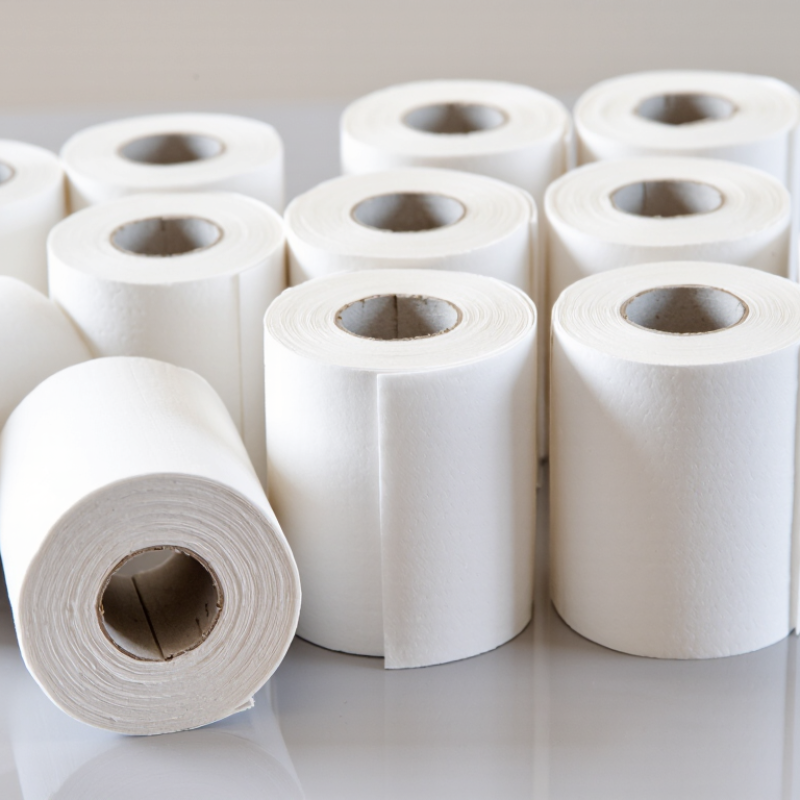
What 3 1/8-Inch Thermal Paper Rolls Are and Where They Are Used
A 3 1/8-inch thermal paper roll is usually 80 millimeters wide. It prints through heat, not ink. Most rolls fit countertop tills, mobile payment printers, kiosks, parking machines, and queue-ticket devices. Common lengths range from 50 to 230 feet, depending on paper thickness and core size.
The roll’s width is only one specification. A buyer must check the core diameter, outer diameter, winding direction, and printer sensor position. A roll can measure correctly and still jam. That mistake is surprisingly common. In practical purchasing tests, the first sample should run through a full shift, not only ten receipts. Clear printing matters near the roll’s end, where pressure and alignment may change.
Demand is adapting to digital payments. Worldpay’s Global Payments Report 2024 states that digital wallets represented 50% of global e-commerce transaction value in 2023. Yet physical receipts remain useful for restaurants, clinics, transport counters, and retail returns. Material safety also deserves attention. The European Chemicals Agency restricts bisphenol A in thermal paper to 0.02% by weight from January 2020. Buyers should request current compliance documents and confirm phenol-free or alternative coating claims. Some “eco” descriptions remain too vague. Recyclability can also vary because thermal coatings complicate normal paper recovery. Storage is another overlooked detail: keep rolls away from heat, sunlight, moisture, and plasticizers. Otherwise, receipts may fade before customers leave the counter.
Key Specifications Global Buyers Should Compare
10 Best 3 1 8 Inch Thermal Paper Rolls for Global Buyers
Key Specifications Global Buyers Should Compare
A 3 1/8-inch roll usually measures 80 mm wide. That width fits many receipt printers, but compatibility is never automatic. Buyers should verify width, core diameter, maximum roll diameter, and winding direction. A 0.5 mm mismatch can cause feeding problems. Roll length also matters. Longer rolls reduce replacement labor, yet they may exceed the printer’s housing capacity. Grand View Research valued the global thermal paper market at about USD 4.3 billion in 2023, showing strong demand for consistent, scalable supplies.
Paper weight and thickness affect print quality. Compare grammage, caliper, image density, and thermal sensitivity. In practical testing, dense black receipts should remain readable after repeated handling. Test samples before placing large orders. Storage deserves equal attention. Smithers’ thermal printing research highlights durability and regulatory compliance as continuing purchasing concerns. Buyers should request BPA-free or phenol-free documentation, migration information, and storage guidance. Country-specific rules can differ.
Tips: Ask for samples from every production batch. Check a 30-day stored receipt. Compare fading, curling, dust, and cutting performance. Do not trust attractive specifications alone. I have seen a thinner roll run smoothly but fade quickly in warm vehicles. That weakness is easy to miss during a short printer test. Use ISO 536 for grammage and ISO 534 for thickness when suppliers provide measured data. Keep cartons sealed, dry, and away from direct sunlight. Forecast seasonal demand carefully; low unit cost can become expensive when emergency freight is required.
10 Best 3 1/8 Inch Thermal Paper Rolls for Global Buyers - Key Specifications Global Buyers Should Compare
| Rank | Roll Type | Paper Width | Typical Roll Length | Core Inner Diameter | Maximum Roll Diameter | Paper Thickness | Basis Weight | Color | Phenol Chemistry | Image Durability | Recommended Application |
| 1 | Premium Long-Life POS Roll | 80 mm / 3.125 in | 230 ft / 70.1 m | 7/16 in / 11.1 mm | 3.15 in / 80 mm | 2.4 mil / 61 μm | 65 g/m² | White | BPA-free and BPS-free | Up to 10 years under recommended storage conditions | High-volume retail, banking, and transport receipts |
| 2 | Premium High-Contrast POS Roll | 80 mm / 3.125 in | 230 ft / 70.1 m | 7/16 in / 11.1 mm | 3.15 in / 80 mm | 2.6 mil / 66 μm | 68 g/m² | White | BPA-free; phenol-free | Up to 7 years under recommended storage conditions | Receipts requiring sharp barcodes and dense graphics |
| 3 | Standard Economy POS Roll | 80 mm / 3.125 in | 230 ft / 70.1 m | 7/16 in / 11.1 mm | 3.15 in / 80 mm | 2.2 mil / 56 μm | 60 g/m² | White | BPA-free | Up to 5 years under recommended storage conditions | General checkout and quick-service receipts |
| 4 | Moisture-Resistant POS Roll | 80 mm / 3.125 in | 220 ft / 67.1 m | 7/16 in / 11.1 mm | 3.15 in / 80 mm | 2.5 mil / 64 μm | 67 g/m² | White | BPA-free and phenol-free | Up to 5 years; improved resistance to brief moisture exposure | Restaurants, grocery stores, and outdoor point-of-sale use |
| 5 | Eco-Focused Lightweight Roll | 80 mm / 3.125 in | 273 ft / 83.2 m | 7/16 in / 11.1 mm | 3.15 in / 80 mm | 1.9 mil / 48 μm | 52 g/m² | White | BPA-free and BPS-free | Up to 3 years under recommended storage conditions | Low-material-use retail and self-checkout systems |
| 6 | Compact Short-Length POS Roll | 80 mm / 3.125 in | 150 ft / 45.7 m | 7/16 in / 11.1 mm | 2.25 in / 57 mm | 2.2 mil / 56 μm | 60 g/m² | White | BPA-free | Up to 5 years under recommended storage conditions | Compact terminals, kiosks, and low-volume counters |
| 7 | Heavy-Duty Thermal Roll | 80 mm / 3.125 in | 220 ft / 67.1 m | 7/16 in / 11.1 mm | 3.15 in / 80 mm | 2.8 mil / 71 μm | 75 g/m² | White | BPA-free and BPS-free | Up to 10 years under recommended storage conditions | Warehouse, logistics, and high-frequency POS printing |
| 8 | Direct-Thermal Delivery Roll | 80 mm / 3.125 in | 230 ft / 70.1 m | 7/16 in / 11.1 mm | 3.15 in / 80 mm | 2.4 mil / 61 μm | 64 g/m² | White | BPA-free; phenol-free | Up to 7 years under recommended storage conditions | Courier receipts, delivery records, and dispatch counters |
| 9 | Recycled-Fiber Thermal Roll | 80 mm / 3.125 in | 230 ft / 70.1 m | 7/16 in / 11.1 mm | 3.15 in / 80 mm | 2.3 mil / 58 μm | 62 g/m² | White | BPA-free and BPS-free | Up to 5 years under recommended storage conditions | Procurement programs prioritizing recycled content |
| 10 | Standard ATM and Ticketing Roll | 80 mm / 3.125 in | 220 ft / 67.1 m | 7/16 in / 11.1 mm | 3.15 in / 80 mm | 2.5 mil / 64 μm | 66 g/m² | White | BPA-free and BPS-free | Up to 10 years under recommended storage conditions | ATMs, parking systems, transit, and ticketing machines |
Specifications are representative purchasing benchmarks. Actual roll length, coating chemistry, durability, and core dimensions should be confirmed against the equipment manual and supplier test report before bulk ordering.
Top 10 Types of 3 1/8-Inch Thermal Paper Rolls
Choosing a 3 1/8-inch thermal paper roll means matching the paper to the machine and working environment. The width is usually about 80 millimeters, but core size and roll length can differ.
The ten main types include standard receipt paper, BPA-free paper, phenol-free paper, archival paper, long-life paper, recycled thermal paper, waterproof paper, oil-resistant paper, heat-resistant paper, and perforated paper.
Standard receipt paper Standard receipt paper suits everyday retail counters.
BPA-free and phenol-free options BPA-free and phenol-free options reduce concern about certain coating chemicals.
Archival and long-life grades Archival and long-life grades keep printed text readable for extended storage.
Recycled thermal paper Recycled rolls support material-saving programs, although their surface may feel slightly different.
Waterproof paper Waterproof paper helps in damp locations.
Oil-resistant paper Oil-resistant paper fits food-service counters and busy kitchens.
Heat-resistant paper Heat-resistant paper performs better near warm equipment.
Perforated rolls Perforated rolls separate receipts quickly and cleanly.
Check the printer manual before ordering. A roll may fit the width but still fail because of its core, diameter, or winding direction. I have seen buyers focus on price and overlook storage conditions. That choice can cause faded receipts in hot vehicles or humid stockrooms. Paper quality also depends on coating uniformity, print darkness, and smooth feeding. Test a small carton first. Some “long-life” claims still need practical verification under light, heat, and handling. Global buyers should request material specifications, packing details, and sample images from the supplier. Consistency matters more than a low unit price.
How to Evaluate Print Quality, Compatibility, and Shelf Life
Choosing a 3 1/8 inch thermal paper roll requires more than checking its width. Print quality depends on coating uniformity, paper density, and thermal sensitivity. A clean roll should produce dark, even characters without gray edges or missing lines. Test a sample at normal speed and at the device’s highest speed. Small differences become obvious on receipts with barcodes or fine text.
Compatibility often fails at the core. Measure the roll width, core diameter, outer diameter, and winding direction before ordering. The roll must feed smoothly without rubbing the printer cover. A roll that fits the slot may still cause paper jams. I have seen buyers overlook the core size, then discover that the printer spindle leaves the roll loose. That mistake is easy to avoid.
Shelf life depends heavily on storage conditions. Keep rolls sealed, dry, and away from sunlight, heaters, solvents, and strong plastic odors. A stable room temperature is preferable. Ask suppliers for production dates, coating specifications, and storage guidance. For long-distance shipping, inspect sample rolls after transport. Print a receipt, store it for several weeks, and compare its contrast. This test is imperfect, but it reveals fading risks better than a specification sheet alone. Some buyers also request phenol-free or other material declarations when their market requires them.
Buying, Shipping, and Storage Considerations for International Markets
10 Best 3 1/8 Inch Thermal Paper Rolls for Global Buyers
Buying, shipping, and storing 3 1/8-inch thermal paper requires more than checking price. The standard width is about 80 mm, but small size differences can cause printer jams. Confirm width, roll diameter, core size, and winding direction before ordering. Ask for a clear technical sheet and a physical sample. A sample reveals curling, loose edges, and faint printing better than a product photograph.
For international shipments, calculate the outer carton size and gross weight early. Oversized cartons increase freight costs and may suffer more impact damage. Use moisture-resistant packaging, corner protection, and clear batch labels. Request recent test records for image stability and restricted-substance compliance. Requirements can differ between destination markets, so buyers should verify current local rules with qualified customs or compliance professionals. Do not rely on an old certificate.
Storage conditions matter after delivery. Keep rolls in their original packaging, away from sunlight, heaters, solvents, and plastic surfaces that may affect the coating. A cool, dry room is preferable, with stable temperature and moderate humidity. Use older stock first. Poor rotation is common. I have seen perfectly packed rolls lose contrast after long exposure to heat near loading areas. That mistake is easy to miss during receiving checks. Test one roll from every shipment, including barcode readability and print density, before releasing the full carton to daily operations.
10 Best 3 1/8 Inch Thermal Paper Roll Configurations for Global Buyers
Comparison of common roll-length options for international purchasing. Every roll uses the standard 3 1/8-inch width, equal to 79.375 mm. Paper area is calculated from the nominal width and roll length.
Longer rolls provide more paper per unit and can reduce replacement frequency, but they may increase carton weight, storage requirements, and shipping costs. Buyers should confirm core size, outer diameter, paper grade, packaging, and moisture protection before placing international orders.

