
Skip to content

2026 Top Electric Scooter Ebike Types for Global Buyers

The 2026 electric mobility market is becoming more diverse, but choosing the right Electric Scooter Ebike remains surprisingly difficult. Global buyers now face many options, including compact commuter scooters, seated electric scooters, folding ebikes, cargo ebikes, and rugged off-road models. Each type serves a different daily reality. A short city trip needs portability, while steep streets demand stronger motors, reliable brakes, and stable tires.

Tony Seba, a respected transport and energy analyst, has said, “The future is electric, and it’s coming faster than you think.” His view reflects a visible shift in urban travel. However, speed alone should not guide a purchase. Battery range, charging time, rider weight, weather resistance, repair access, and local equipment requirements matter more than promotional claims. Buyers should inspect test data, warranty terms, battery certifications, and independent reviews before deciding. Small details matter. A removable battery may be essential in an apartment. A bright headlight can change a rainy evening ride.

This guide compares the leading Electric Scooter Ebike types for global buyers in 2026. It considers commuting, leisure, delivery work, family transport, and mixed-terrain use. The discussion also recognizes regional differences in roads, climate, infrastructure, and product standards. Some recommendations may remain imperfect because real-world performance changes with temperature, hills, cargo, and riding habits. That limitation deserves honesty. A carefully matched model usually delivers more value than the most powerful model. Safety, serviceability, and long-term reliability should remain central to every comparison.
2026 Top Electric Scooter Ebike Types for Global Buyers

Electric Scooter and E-Bike Categories Explained for 2026 Buyers

Electric Scooter and E-Bike Categories Explained for 2026 Buyers

Electric scooters suit short urban trips, especially where storage space is limited. Commuter scooters usually feature compact frames, moderate motors, lights, and electronic braking. They are easy to carry upstairs. Performance scooters use larger batteries, wider tires, and stronger suspension. Their extra weight can reduce portability and increase charging time.

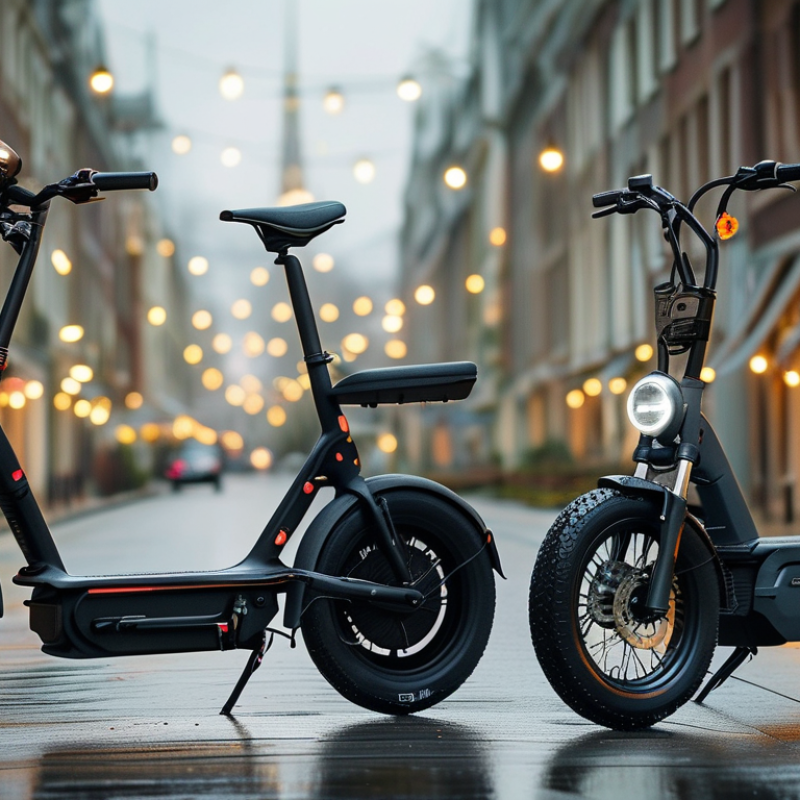
Seated electric scooters offer better comfort for older riders or longer neighborhood journeys. Folding e-bikes help commuters combine cycling with trains and buses. City e-bikes usually provide upright seating, integrated lights, and practical racks. Cargo e-bikes carry children, groceries, or work equipment, but their longer frames need wider turning space. Mountain e-bikes focus on traction, hydraulic braking, and controlled suspension. Road-oriented models favor lower weight and efficient tires.

Choose by daily conditions, not impressive specifications alone. Measure your storage area first. Check the rider limit, battery replacement support, charger safety, and water-resistance rating. Local rules may restrict speed, power, lighting, or where these vehicles can operate. Verify them before purchase. A larger battery sounds useful, yet it adds weight and charging cost. Small wheels can feel nimble, but potholes become harsher. There is no perfect category. I still think many buyers underestimate maintenance, particularly tire pressure and brake inspection. Test the riding position if possible. A five-minute trial can reveal awkward controls, weak balance, or a frame that feels too tall.

Key Design Differences Between Scooters and Electric Bicycles

2026 Top Electric Scooter Ebike Types for Global Buyers

Key Design Differences Between Scooters and Electric Bicycles

Electric scooters and e-bikes serve different riding habits, even when their motors show similar power. A scooter usually has a standing deck, narrow handlebars, and small wheels. Its folding stem saves space in apartments and car trunks. However, small wheels react sharply to potholes and loose gravel. An e-bike uses a saddle, pedals, and a bicycle-style frame. Larger wheels usually provide better stability on uneven roads. Pedaling also extends practical range when batteries become less effective in cold weather.

The International Energy Agency reported that electric two- and three-wheelers exceeded half of global sales in 2023. China drove much of that growth, but buyer needs vary widely by region. For daily commuting, compare battery capacity, charging time, brake design, tire width, and water resistance. A torque sensor can create smoother assistance than a basic cadence sensor. Yet, specifications alone can mislead. A heavier e-bike may feel safer, while a lighter scooter may be easier to carry upstairs. Neither is automatically better.

Tips: Measure your storage space first. Check the real riding surface, not only the advertised range. Read independent safety and durability tests. Look for clear technical documentation and local service support. The categories are not perfectly clean. Some scooters now offer seats, while compact e-bikes resemble scooters. That overlap deserves careful inspection.

Sources: International Energy Agency, Global EV Outlook 2024; OECD/ITF, Safe Micromobility, 2020.

Top Electric Scooter Types for Urban and Recreational Use

Top Electric Scooter Ebike Types for Global Buyers

Urban riders usually need a compact commuter scooter with stable tires, responsive brakes, and bright front and rear lights. A folding frame fits beside a desk or inside a train, but its hinges require regular inspection. Pneumatic tires absorb rough pavement better than solid tires. They can also lose pressure.

For short city trips, a lightweight standing scooter offers quick handling and simple storage. A seated electric scooter suits longer commutes, older riders, or people carrying small loads. Check the deck length, handlebar height, and permitted speed before buying. Local requirements differ, so buyers should confirm rules with transportation authorities. Range estimates can be optimistic. Hills, cold weather, rider weight, and frequent stops reduce actual distance.

Recreational riders may prefer wider tires, stronger suspension, and a broader foot platform. These features improve comfort on gravel paths and park trails, though they add weight. Off-road capability does not make every surface safe. Wet leaves, loose stones, and sharp edges still demand slower control. Keep the battery dry, use the supplied charger, and inspect brake cables before each ride. One practical detail is often missed: storage temperature affects battery performance. A careful buyer should test the riding posture, turning response, and stopping distance before committing. The fastest model is not always the most useful one.

2026 Top Electric Scooter Ebike Types for Global Buyers - Top Electric Scooter Types for Urban and Recreational Use
Vehicle Category Type Typical Motor Output Typical Top Speed Typical Real-World Range Approx. Weight Best Use Key Advantages Important Buying Considerations
Electric Scooter Compact Commuter Scooter 250–500 W nominal 20–32 km/h 15–35 km 12–18 kg Short urban trips, last-mile commuting and public-transport connections Lightweight, foldable and easy to store Check local speed limits, rider-weight rating, solid-tire comfort and water-resistance level
Electric Scooter Long-Range Commuter Scooter 500–800 W nominal 25–40 km/h 35–70 km 18–28 kg Daily commuting, longer city routes and mixed urban surfaces Larger battery, stronger hill performance and improved ride stability Battery capacity, charging time, carrying weight and local registration requirements
Electric Scooter Performance Scooter 1,000–3,000 W combined 40–70 km/h 35–80 km 25–45 kg Private-property riding, steep hills and high-performance recreational use High acceleration, dual-motor traction and powerful braking systems Often unsuitable for public roads; verify legal speed, helmet and insurance rules
Electric Scooter Off-Road Electric Scooter 800–2,000 W combined 30–55 km/h 25–60 km 25–40 kg Gravel paths, private trails and recreational riding Suspension, wide pneumatic tires and greater ground clearance Not generally intended for public streets; tire maintenance and weather protection are important
Electric Scooter Seated Electric Scooter 500–1,500 W nominal 25–45 km/h 30–70 km 25–50 kg Comfort-oriented commuting and neighborhood transportation Relaxed riding position, larger frame and better comfort on longer trips Storage dimensions, seat regulations, turning radius and parking space
Electric Scooter Three-Wheel Mobility Scooter 250–750 W nominal 8–25 km/h 20–45 km 40–90 kg Accessible local travel, shopping areas and paved paths Easy controls, stable seating position and useful cargo capacity Turning stability, ramp capability, transportability and accessibility regulations
E-Bike City E-Bike 250–500 W nominal 25–32 km/h 40–100 km 20–28 kg Urban commuting, errands and paved cycle paths Comfortable upright geometry, lights, fenders and practical luggage mounts Frame size, step-through access, local pedal-assist classification and rack capacity
E-Bike Folding E-Bike 250–500 W nominal 25–32 km/h 30–80 km 18–27 kg Multimodal commuting, apartments, boats and recreational travel Compact folded dimensions and convenient storage Hinge quality, folded size, carrying weight, wheel size and battery removal
E-Bike Hybrid or Trekking E-Bike 250–750 W nominal 25–45 km/h 50–130 km 22–32 kg City travel, touring and long-distance mixed-surface riding Balanced geometry, efficient tires and strong accessory compatibility Battery size, luggage limits, drivetrain durability and regional speed category
E-Bike Mountain E-Bike 250–750 W nominal 25–45 km/h 30–90 km 21–30 kg Forest trails, gravel routes and recreational off-road riding Suspension, hydraulic disc brakes, wide tires and improved traction Suspension travel, frame durability, motor heat management and trail legality
E-Bike Cargo E-Bike 250–750 W nominal 25–32 km/h 35–100 km 25–45 kg Family transport, grocery delivery and commercial urban logistics High payload capacity, low operating cost and reduced car dependence Maximum gross weight, load balance, parking dimensions, brakes and battery capacity
E-Bike Fat-Tire E-Bike 500–750 W nominal 25–45 km/h 35–90 km 25–35 kg Sand, snow, loose gravel and recreational trail riding High flotation, strong traction and a more stable ride on soft surfaces Higher rolling resistance, tire replacement cost, storage width and motor classification
E-Bike Speed-Pedelec E-Bike 350–750 W nominal Up to 45 km/h 45–120 km 23–32 kg Fast commuting and longer road-based journeys Higher cruising speed and efficient performance over distance May require registration, insurance, a suitable helmet and restricted route access
E-Bike Tricycle E-Bike 250–750 W nominal 20–32 km/h 35–90 km 25–40 kg Accessible transport, cargo carrying and low-speed recreational use Stable standing position and generous rear cargo space Cornering technique, overall width, reverse maneuvering and storage requirements
Typical figures are indicative market ranges for 2026 and vary with rider weight, terrain, weather, tire pressure, battery size, assist level and local regulations. Public-road speed and power limits differ by country and region.

Leading E-Bike Types for Commuting, Cargo, and Off-Road Travel

In 2026, electric bikes are becoming more specialized for daily travel. Commuter e-bikes suit city streets, train connections, and short office trips. Their lighter frames, integrated lights, and moderate batteries make parking easier. A step-through design can help riders carrying work bags or wearing formal clothing. Choose hydraulic or reliable mechanical brakes for wet roads and busy intersections.

Cargo e-bikes support groceries, tools, children, or small deliveries. Check the rated payload, rack strength, wheel size, and frame stability before buying. A long-tail model usually handles larger loads, while a front-loader offers better cargo visibility.

Off-road e-bikes need wider tires, stronger suspension, sealed electrical connections, and controlled torque on loose ground. However, extra power can reduce range quickly. Field testing shows that tire pressure and rider weight often matter more than advertised battery size. I once overestimated range on a steep route. That mistake was expensive in time, not money.

Tips: Match the motor and battery to your route, not the highest number on a specification sheet. Confirm local rules for speed, power, helmets, and permitted paths. Look for clear battery safety information, dependable service support, and recognized conformity markings where required. Test the riding position with your real load. Comfort is easy to ignore. It should not be. Inspect charging instructions, warranty terms, and replacement-part access before placing an international order.

How Global Buyers Can Match Vehicle Types to Local Needs

Choosing an electric scooter or e-bike starts with local conditions, not catalog photos. The IEA’s Global EV Outlook 2024 reports that electric two- and three-wheelers represented more than half of global sales in 2023. That scale reflects practical demand, especially for short urban trips. Buyers should examine road surfaces, traffic speed, parking space, and charging access before selecting a vehicle.

A pedal-assist e-bike suits cities with cycle lanes, moderate distances, and active commuting. A seated electric scooter may work better for longer daily travel, but suspension and braking performance deserve close inspection. Folding models help apartment residents with narrow lifts. Cargo e-bikes can support deliveries or family transport, provided local rules permit their size and speed. Three-wheel designs offer extra stability, although their wider turning radius can create problems on crowded streets.

Climate changes the calculation. High heat, steep roads, heavy rain, and cold weather can reduce practical range and battery efficiency. A claimed 60-kilometre range may deliver much less with a heavy rider, hills, and frequent stops. The International Transport Forum highlights the importance of safe infrastructure when expanding micromobility systems. That point is easy to overlook.

In field evaluations, measure stopping distance, lighting visibility, tire grip, and charging time. I would also test the vehicle after several days, not one showroom ride. One selection mistake can remain expensive. Local service capacity, spare-part availability, and warranty terms should be verified before payment.